
Buying Your First Mountain Home From Down the Hill: Inspection Questions Valley Buyers Don’t Know to Ask
Buying Your First Mountain Home From Down the Hill: Inspection Questions Valley Buyers Don’t Know to Ask
If you’ve bought a house in Irvine, Pasadena or Rancho Cucamonga, you already know how a home inspection goes. Then you drive up the hill, fall for a 1960s cabin with a deck hanging out over the pines, and the disclosures start using words nobody used down there. Build-up. Crawl space. Kickout flashing. Private lateral.
None of that means the house is a bad buy. It means it’s a different kind of house, and the questions that protected you in the valley won’t cover everything up here. This guide gives you the vocabulary first, then the questions worth asking before and during your inspection, so you go into the process knowing what to look for instead of nodding along.
Why a Mountain House Isn’t a Valley House
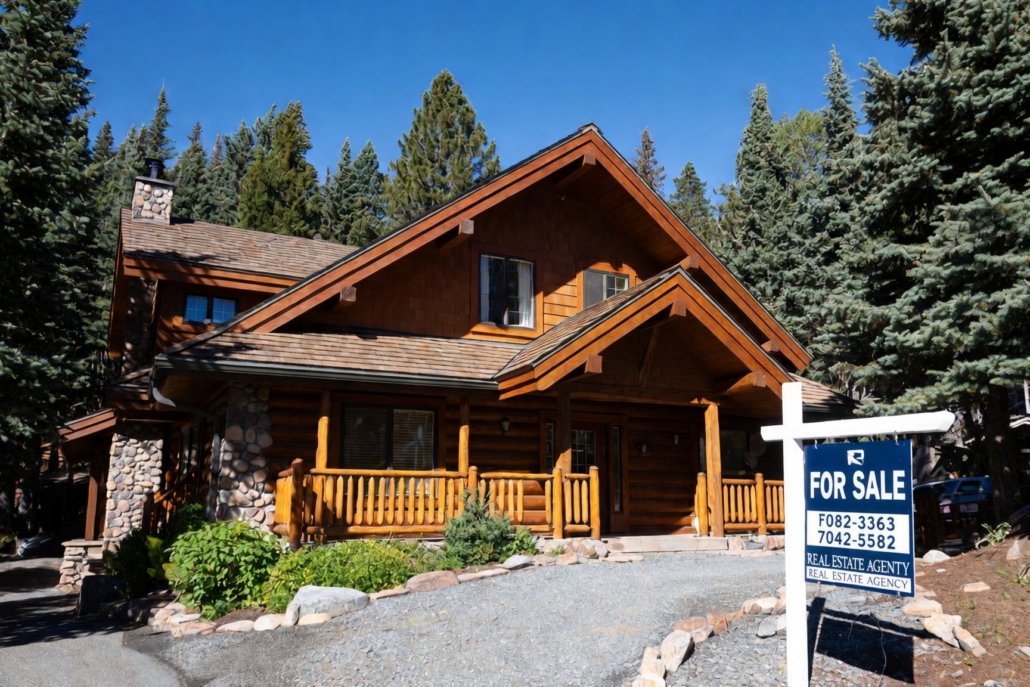
Many valley homes sit on a concrete slab on a flat lot. A lot of homes in Lake Arrowhead, Crestline, Running Springs and the communities between sit on sloped lots, raised off the ground on wood framing, with the living space stacked over a crawl space or a lower level. They carry snow on the roof part of the year. They’re heated with wood stoves and propane as often as anything else. Plenty of them sit empty for weeks at a time as weekend homes. Wood siding, decks and hillside drainage do the work that stucco and a flat lot do in the valley.
Each of those differences changes where problems hide. Up here, the surprises are more often under the house, at the places where the roof meets a wall or a chimney, and in wood that’s been wet, dry and frozen for decades. We cover the full comparison in How a Mountain Home Inspection Differs From a Valley Home Inspection.
Eight Words You’ll See in a Mountain Inspection Report
Build-up
Locals say “build-up” for the framed structure that lifts a house above a sloping lot. Instead of resting on a slab, the house sits on posts, beams and short framed walls, sometimes left open underneath and sometimes enclosed for storage. It’s normal mountain construction. What matters is the condition of the wood, how the posts meet their footings, and how well the framing is tied together.
Crawl space
The space between the ground and the floor framing. On a hillside it can be a few inches tall on one side and tall enough to stand in on the other. This is where we find moisture, rodent activity, plumbing leaks, fallen insulation and framing problems that never show from inside the living room. An inspection that doesn’t go into the crawl space has skipped one of the most important parts of a mountain home.
Snow load
The weight of snow a roof and its framing have to carry. Mountain homes are built for it, but older roofs, later additions and neglected framing can show strain: a sagging ridgeline, cracked rafters, or interior doors that start sticking in winter. An inspection can point out visible signs of past overload. Whether a roof can carry a specific load is a question for a structural engineer.
Flashing
The metal pieces that direct water away from joints where the roof meets a chimney, a wall, a skylight or a vent pipe. Kickout flashing is the small bent piece at the bottom of a roof-to-wall joint that keeps water from running down behind the siding. Snow piled against these joints and repeated freeze and thaw make flashing one of the first places we look when a mountain home leaks.
Wood decay
Rot caused by fungi growing in wood that stays wet. Weathered gray deck boards aren’t the same thing. Decay matters when it reaches the siding that protects the wall, the sill plate the house rests on, the ledger board that holds the deck to the house, or the framing in the crawl space. We probe suspect wood during the inspection to tell surface wear from damage that goes deeper.
Septic or sewer lateral
Not every mountain home is on public sewer. Some are on septic systems, which a standard home inspection doesn’t evaluate. That takes a separate septic inspection. If the home is on sewer, the private lateral is the pipe running from the house to the district’s main line, and it’s generally the property owner’s to maintain. A sewer camera inspection is how you see its condition. The Lake Arrowhead Community Services District publishes its sewer service area and lateral policy, and other communities are served by other districts, so confirm for the specific address.
Propane
Many homes up here run on propane instead of natural gas. That means a tank on the property, which may be owned or leased from the supplier, and gas lines running to the house. We look at the visible tank installation, clearances and connections. Who owns the tank, and what it costs to fill, are questions for the seller and the propane company.
“Further evaluation recommended”
The phrase you’ll see most in any report. It means we found a condition that needs a specialist, such as a roofer, a structural engineer, a chimney sweep or a septic contractor, to tell you its cause and cost. It isn’t a verdict that something is badly wrong, and it isn’t a phrase to skip past. These are the items to schedule quickly, because your inspection contingency is running.
Questions to Ask Before Inspection Day
Some of the most useful answers come from the seller, the disclosures and public records. They help most when you have them before the inspection, not after.
Is the house on sewer or septic? Ask the seller, then confirm with the local district. If it’s septic, book the septic inspection right away. Specialists on the mountain can be booked out, especially in winter.
Has the house been sitting empty, and were the utilities shut off? Vacant mountain homes are often winterized with the water off and the gas or propane shut down. Ask for water, power and fuel to be on for inspection day. We can’t test a water heater, a furnace or the plumbing if they’re turned off, and a home that sat empty through winter is exactly the one where you want them tested.
How old is the roof, and has it ever leaked? Read the seller’s disclosures before the inspection, not after. A past leak that was repaired is useful to know. It tells us where to look closely.
How is the house heated? Wood stoves, fireplaces, propane furnaces, wall heaters and electric baseboard heat are all common up here, sometimes in the same house. If there’s a wood stove or fireplace, ask when it was last cleaned and inspected. A home inspection covers what’s visible. A chimney sweep inspects the inside of the flue.
Can the inspector get to everything? A locked crawl space hatch, stored belongings blocking access, or a roof covered in snow limits what anyone can see. Ask to have access cleared before inspection day. If snow covers the roof, talk with us about what can and can’t be evaluated and whether a recheck after melt makes sense.
Questions to Ask the Inspector You Hire
Inspectors aren’t interchangeable, and a mountain home is where the differences show. Ask whether they go into the crawl space, and how they’ll look at the roof. Ask how long they expect to be on site for a house of this age and size. Ask what isn’t included, so you know which specialists to call. And ask whether you can attend. If the answer to that last one is anything but yes, keep looking.
Walk the House With Us
The report tells you what we found. The walkthrough shows you. When you’re there, you see the actual crawl space framing, the actual flashing and the actual moisture readings, and you can ask anything while we’re standing in front of it. No question is too basic. Most of our clients are buying their first mountain home, and the point is for you to leave understanding the house, not just holding a PDF.
Bring the seller’s disclosures, your list of questions, and shoes you can walk a sloped yard in. If you can’t stay for the whole inspection, plan to be there at the end, when we go through what we found. You can read more in What to Expect at Your Peak to Peak Home Inspection.
If You’re Coming From Down the Hill
Distance is the part valley buyers underestimate. You may not be able to drive up twice in a week, and the specialists a mountain home sometimes needs, like a septic contractor, a chimney sweep or a sewer camera, each take their own visit. Schedule your inspection early in your contingency period, read the report the day you get it, and book any follow-up evaluations right away. Every mountain house has findings. The goal is to know which ones matter before you sign.
Walk the house with us
Book your mountain home inspection and plan to attend. We’ll show you what we find and answer every question while we’re on site.
Or call 909-436-8999
Signature: TjJsSxdvwHOSauzt9PcavEyDWIVaLw7riE+dYslgx5tVKtrEArqIhAFx643Aqw5D1TFr+sw+kpt0QfG0DWcBlhgD0dMQCUfOvWr3YDLmPdXCeu54PXLSz2unKAUgNhSefQVgkuxegRch+tglIuAnEY8ADtH+B58aURghWwqA9KN8TsBcpyjXTfMr5k/IqLWX

Leave a Reply
Want to join the discussion?Feel free to contribute!