
How a Mountain Home Inspection Differs From a Valley Home Inspection
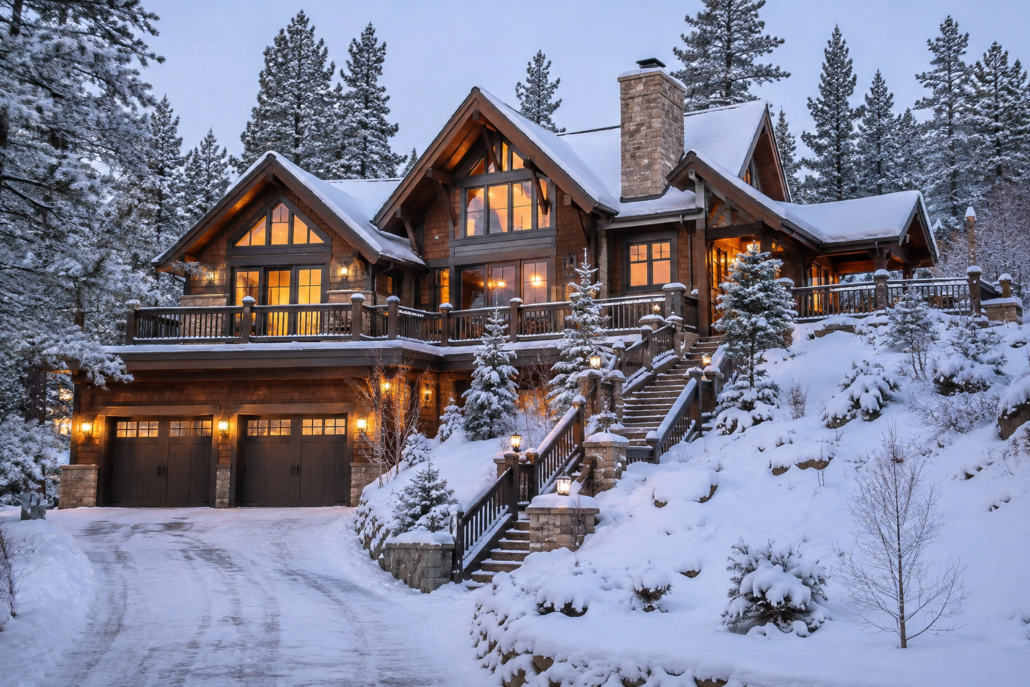
Quick answer: A valley inspector is trained to check for things like drainage toward the foundation, roof wear from sun and rain, and standard electrical and plumbing systems. A mountain inspector is checking all of that, plus how the roof and flashing perform under snow load, how a crawl space or hillside foundation handles spring melt and slope drainage, whether a wood-burning fireplace and chimney are venting safely, and whether the home’s utilities, propane, well, septic, are set up correctly for a property that may sit unoccupied for stretches during winter.
The inspection itself covers the same categories on paper: roof, structure, electrical, plumbing, HVAC, interior. What changes is where an experienced inspector spends the extra time, because the mountain environment creates specific, predictable failure points that a valley home simply doesn’t have.
Most buyers assume a home inspection is a home inspection, and that the person doing it just needs a license and a flashlight. That assumption holds up fine in a flat subdivision in the Inland Empire. It falls apart the first time an inspector who’s never worked above 4,000 feet stands on a steep-pitch roof in Lake Arrowhead and doesn’t know what improperly detailed step flashing looks like under a snow load, or checks a crawl space without accounting for the fact that it sits on a graded hillside lot instead of a flat pad.
This isn’t a knock on valley inspectors. It’s a different job. The building science is the same everywhere, but which parts of it actually get stress-tested depends entirely on climate and terrain, and these mountains stress-test a house in ways the valley never does.
What Actually Changes at Elevation
| What We’re Checking | Typical Valley Focus | Mountain-Specific Focus |
|---|---|---|
| Roof & Flashing | Wear from sun/UV, granule loss, basic flashing at penetrations | Snow-shedding detail at pitch transitions, ice-dam risk at eaves, step and counter-flashing integrity around chimneys, kickout flashing at roof-to-wall junctions |
| Foundation & Crawl Space | Standard grading and drainage on a flat or gently sloped lot | Pier-and-post or stepped foundations on hillside lots, slope drainage and retaining wall condition, crawl space moisture from spring snow melt |
| Exterior & Siding | General weathering, paint and caulking condition | Wood decay in log or timber construction, Z-flashing and sidewall flashing at horizontal siding joints, deck ledger board water intrusion |
| Heating & Fireplace | Standard forced-air furnace inspection | Wood-burning fireplace and chimney condition, creosote buildup, propane system and tank condition where there’s no natural gas line |
| Utilities | Municipal water and sewer assumed | Private well output and water quality, septic system condition, backup power considerations for winter outages |
| Scheduling | Rarely weather-dependent | Access and safety depend on road conditions and snow cover; some conditions can’t be fully assessed until snow clears |
Roof and Flashing: Where Most Mountain Problems Start
Snow load changes what a roof needs to do structurally, and it changes how water behaves once that snow starts melting. Ice dams form when heat escaping from the attic melts snow on the upper roof, which then refreezes at the colder eave, backing water up under the shingles. A valley inspector rarely thinks about this because it doesn’t happen in the valley. Up here, it’s one of the most common sources of hidden water damage we find, and it’s almost always tied back to flashing that wasn’t detailed correctly for snow-shedding in the first place, particularly at chimneys, sidewalls, and roof-to-wall transitions.
Crawl Spaces and Foundations on Sloped Lots
A flat-lot foundation in the valley deals with rainwater in a fairly predictable way. A foundation on a graded hillside lot in the mountains deals with spring snow melt moving downhill across and sometimes under the structure, retaining walls that may or may not be doing their job, and crawl spaces that can trap moisture longer than a flat-pad crawl space would. None of that shows up as an obvious red flag from the driveway. It shows up when an inspector who knows what to look for gets underneath the house.
Wood Decay and Elevation-Specific Wear
Log and timber construction is common up here for obvious reasons, and it comes with a maintenance reality that stucco and stick-frame valley homes don’t share. Wood decay from repeated freeze-thaw cycles and moisture exposure can sit hidden under stain or siding for years before it becomes visible, which is exactly why it’s worth specific attention rather than a general glance during an inspection.
What This Means for Scheduling
One honest tradeoff: a mountain inspection sometimes can’t move as fast as a valley one, and that’s not the inspector being difficult. Deep snow cover can genuinely limit what’s safely accessible on a roof or around a foundation on a given day. A good mountain inspector will tell you directly when that’s the case rather than rushing through it and putting a checkmark next to something they couldn’t actually see.
If You’re Buying From Out of the Area
If you’re relocating from Los Angeles, the Inland Empire, or anywhere without a real winter, the biggest adjustment isn’t the inspection itself, it’s knowing which questions to ask before you’re standing in escrow. Ask specifically about the roof’s flashing detail, the age and condition of the chimney if there’s a wood-burning fireplace, how the crawl space or foundation has handled past winters, and how the well or septic system, if the property has one, has performed. An inspector who works these mountains regularly will already be looking for all of this without being asked. That’s worth confirming before you hire someone.
Which of This Applies Most to You?
Pay closest attention to the heating system, chimney condition, and how the home has historically handled snow load and ice damming, since you’ll be living through every season, not just the ones you’ve visited.
Prioritize the crawl space, plumbing winterization, and propane system, since a property that sits empty for stretches has different failure points than one that’s occupied and heated daily.
Focus on anything that becomes a liability with frequent guest turnover: deck safety, fireplace venting, pool or spa condition if applicable, and general wear that adds up faster under rental use.
Ask your inspector directly to walk you through the mountain-specific findings on your report before you read it alone. What looks alarming on paper is often routine maintenance up here, and what looks minor is sometimes the thing that matters most.
Frequently Asked
Does a mountain home inspection cost more than a standard inspection?
It can, particularly if drone roof inspection, thermal imaging, or a specialty service like mold or septic testing is added. The base inspection scope is comparable to a standard inspection; the difference is usually in what’s recommended as a specialty add-on given the property’s specific risk factors.
Can a mountain home be fully inspected in the winter?
Most of it, yes. Some roof and exterior areas may be limited by heavy snow cover on a given day, and a thorough inspector will disclose exactly what couldn’t be fully assessed rather than guessing.
Should I hire a local mountain inspector instead of one from the valley?
If the inspector doesn’t regularly work in snow-load climates and on hillside lots, they’re less likely to know what mountain-specific flashing, crawl space, and chimney issues actually look like. Experience with this specific terrain matters more than general licensing here.
Buying a Mountain Home?
Get an inspection from a team that actually works these mountains, roofs, crawl spaces, and all.
Schedule an Inspection
909-436-8999
Related Article: What to know before moving to Lake Arrowhead


Leave a Reply
Want to join the discussion?Feel free to contribute!